Platelet-rich plasma (PRP) and stem cell–based treatments for pattern hair loss have some small studies reporting increased hair density, but the evidence is of low or very low quality and the methods vary widely between studies. The Japanese Dermatological Association's 2017 hair loss guideline gives "growth factor introduction and cell transplantation therapy" a grade of C2, the grade it uses when there is no evidence of effectiveness. The best-supported options remain medication and hair transplant surgery, in Japan as in the United States.
This article walks through how Japan's guideline ranks the options, what is known about PRP, fat-derived stem cells and a Japanese cultured-cell approach, how Japan regulates these treatments, and what to ask a clinic before you travel.
How Japan's guideline ranks hair loss treatments
"Hair loss" here means androgenetic alopecia: male pattern hair loss (a receding hairline and thinning crown) and female pattern hair loss (diffuse thinning on top of the head). Other types, such as alopecia areata or shedding after illness or stress, are treated differently, so a clear diagnosis comes first.
The Japanese Dermatological Association's Guidelines for the Diagnosis and Treatment of Male- and Female-Pattern Hair Loss, 2017 edition grades treatments from A (strongly recommended) to D (should not be done). The grades for the options most patients ask about are:
| Treatment | Male pattern hair loss | Female pattern hair loss |
|---|---|---|
| Oral finasteride | A | D |
| Oral dutasteride | A | D |
| Topical minoxidil | A (5%) | A (1%) |
| Hair transplant using your own hair | B | C1 |
| Growth factor introduction and cell transplantation therapy (including PRP) | C2 | C2 |
The guideline defines C2 as "better not done," with no evidence of effectiveness or evidence that the treatment does not work. In its commentary on the growth factor and cell therapy question, the committee notes that randomized trials and case series exist for PRP and for products derived from the culture supernatant (conditioned medium) of fat-derived stem cells. It adds that most of these studies were run at a limited number of institutions, at an advanced-care stage requiring ethics committee approval, and that their effectiveness, including safety, had not been adequately verified. Many such treatments also have to be delivered under Japan's Act on the Safety of Regenerative Medicine, so the committee concluded they could not yet be offered widely. It also describes them as treatments for which there are expectations for the future.
The guideline is from 2017, and the association's guideline page still lists the 2017 edition for pattern hair loss as of November 2026. Newer studies have been published since, which is why the next section looks at a 2024 meta-analysis.
How this compares with the US
US readers will recognize the top of the table. In the United States, finasteride 1 mg (Propecia) is FDA-approved for male pattern hair loss in men only; its label states it is not indicated for women. Topical minoxidil is sold without a prescription under FDA-approved applications, with separate products for men and women. No stem cell product is FDA-approved for hair loss. The FDA's consumer alert on regenerative medicine states that, generally, stem cell products require FDA approval, that the only approved stem cell products are cord blood–derived products for blood disorders, and that no exosome products are approved. For more on that system, see Which stem cell treatments are FDA-approved.
PRP: some evidence, but low quality
PRP is made from your own blood. A small amount is drawn, spun in a centrifuge to concentrate the platelets, and the plasma is injected into the scalp. Platelets release growth factors that are thought to stimulate hair follicles. For background on PRP in other uses, see PRP therapy explained.

The most relevant recent summary is a 2024 systematic review and meta-analysis in PLOS ONE by Yao and colleagues, which compared topical minoxidil plus PRP injections with minoxidil alone. It included five randomized trials, three of which had a high risk of bias. The authors concluded that very low-quality evidence shows that adding injectable PRP to minoxidil may improve outcomes, including hair density and patient satisfaction. They rated the certainty of evidence as low to very low, pointed to the small number of studies and the differences in how PRP was prepared, and called for larger studies with uniform preparation protocols.
In practical terms, PRP has not been shown to be useless, and it has not been shown to work either. Clinics differ in platelet concentration, whether an activating agent is added, the number of sessions and the interval between them. Results from one study cannot be transferred to a particular clinic's protocol.
Fat-derived stem cells and SVF: earlier-stage research
A second approach starts with your own fat. After liposuction, the clinic either separates the stromal vascular fraction (SVF), a mix of cells that includes fat-derived stem cells, or grows fat-derived stem cells in culture and injects them into the scalp. Some protocols combine this with PRP.
Research here is earlier than for PRP. Published work consists mainly of small case series and small trials, and cell processing, dose and combinations differ from study to study. A randomized split-scalp trial comparing SVF with PRP in androgenetic alopecia has been registered with an estimated 20 participants; its registry record lists the status as unknown and has no posted results. There is not enough evidence to say whether stem cells or PRP works better.
A related option is "stem cell conditioned medium" (culture supernatant): the liquid left after stem cells are grown in culture, which contains no cells. The 2017 guideline's commentary covers products derived from fat-derived stem cell culture supernatant under the same C2 question as PRP. Related cell-free products are covered in Exosome therapy.
Dermal sheath cup cells (S-DSC): a Japanese cultured-cell approach
Shiseido has been developing hair regeneration using dermal sheath cup (DSC) cells, found at the base of the hair follicle. A small piece of skin, a few millimeters across, is taken from the back of the scalp where hair is not thinning; the DSC cells are grown in culture, frozen, then thawed and injected into thinning areas.
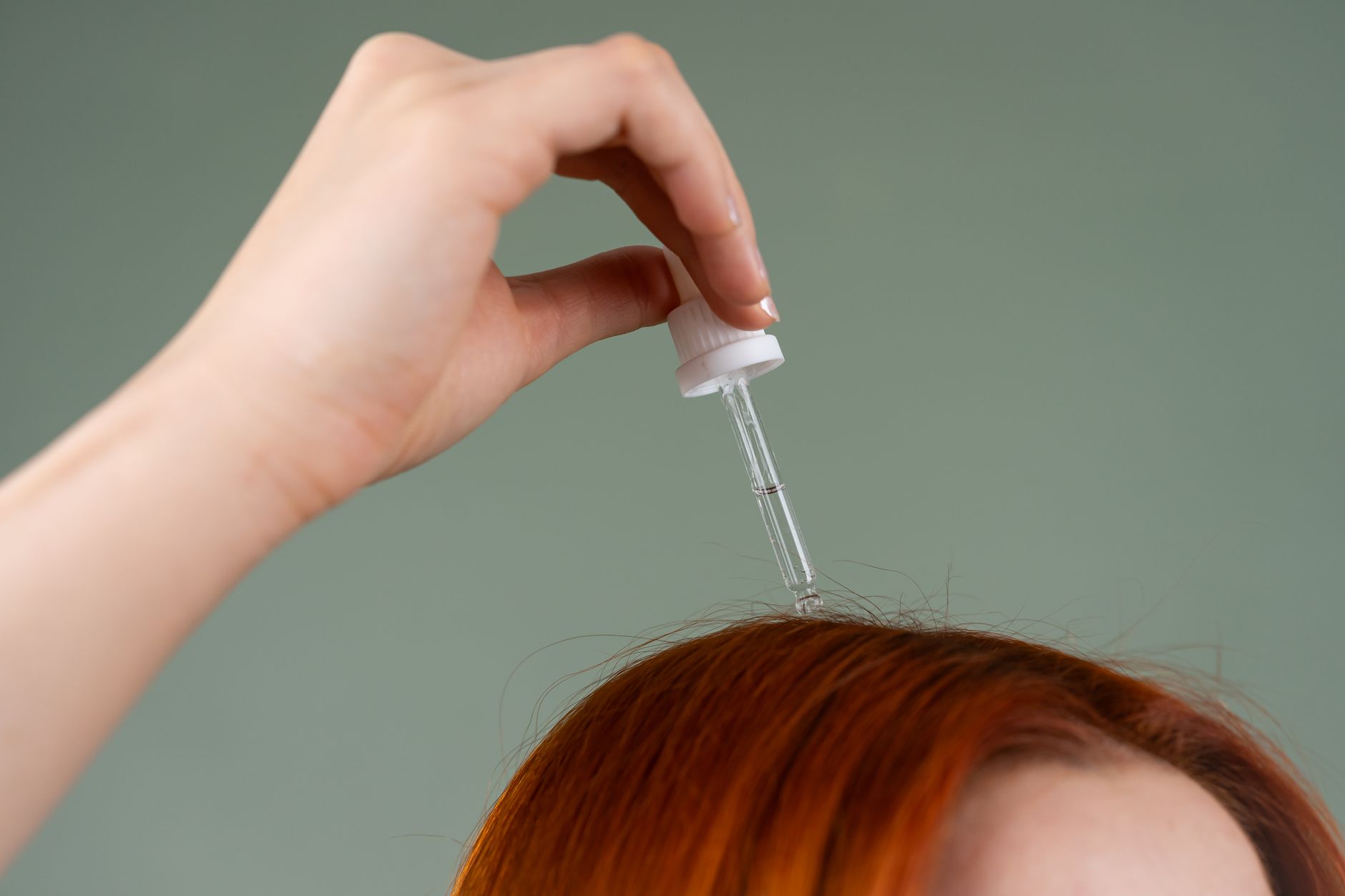
According to Shiseido, the company began this research in 2016 with Tokyo Medical University Hospital and Toho University Ohashi Medical Center, and Kyorin University Hospital joined from 2020 for studies of wider-area and repeated injections. Shiseido states that these studies confirmed efficacy and safety in male and female pattern hair loss; that is the company's own description. The first study was published in the Journal of the American Academy of Dermatology in 2020 (Tsuboi and colleagues): a randomized, double-blind, placebo-controlled dose-finding study in 50 men and 15 women, each given single injections at different doses and placebo in separate scalp areas. At the lowest dose tested, total hair density and cumulative hair diameter increased significantly compared with placebo at 6 and 9 months, with no serious adverse events; the authors note the effect was temporary, lasting until about 9 months.
Shiseido says the research is used in S-DSC hair-thinning treatment that medical institutions have offered since 2024, with Shiseido handling transport, culture and cryopreservation under the institutions' direction. Shiseido describes S-DSC as a "specified processed cell product" (特定細胞加工物). Under Article 2 of the Act on the Safety of Regenerative Medicine, that term means processed cells used in regenerative medicine that are not an approved regenerative medicine product. Toho University's June 2024 announcement describes its S-DSC treatment as Class II, reviewed by a specially certified committee and filed with the MHLW, and provided as self-pay care.
How Japan regulates these treatments
Japan's Act on the Safety of Regenerative Medicine sorts treatments into three risk classes under Articles 2 and 3 of its Enforcement Regulations. For hair loss, the relevant points are:
| Approach | Class under Japanese law |
|---|---|
| Cultured stem cells, including your own cultured fat-derived stem cells | Class II |
| Cultured dermal sheath cup cells (S-DSC) | Class II in the 2024 university hospital plan; each institution's filed plan sets it |
| Uncultured cells used in a non-homologous way | Class II |
| PRP | Depends on how it is used (see below) |
| Cells from another person (allogeneic) | Class I |
For PRP, the class depends on the use. A 2019 Ministry of Health, Labour and Welfare (MHLW) notice explains that centrifuged, uncultured blood products injected into the skin or the mouth count as homologous use, while injection into joint cavities and other tissues with poor blood flow does not, which makes joint injection Class II. The same notice was issued after a clinic filed PRP as Class III but actually injected it into joints. For hair and scalp use, the class follows the plan the clinic has filed.
Whatever the class, a clinic must have its plan reviewed by a certified committee and file a regenerative medicine provision plan before offering the treatment. Filing a plan shows the clinic followed the legal procedure; it does not mean the treatment's effect on hair loss has been proven. For the full framework, see How Japan regulates regenerative medicine and the Safety Act and the three risk classes.
These treatments are private, self-pay care in Japan, outside public health insurance, and each institution sets its own fees. The cost is usually made up of blood draw or tissue collection, cell processing (higher for cultured cells), the number of injection sessions and follow-up visits. See why regenerative treatment in Japan is self-pay.
Questions to ask before you travel
- What type of hair loss do I have? Androgenetic alopecia, alopecia areata and stress-related shedding call for different treatment, so a doctor's diagnosis comes first.
- Which treatment is it exactly? PRP, SVF, cultured stem cells, conditioned medium or cultured dermal sheath cup cells, and will you be asked to use medication alongside it?
- Which class is it, which committee reviewed it, and when was the provision plan filed?
- How many sessions, how far apart, and can it be completed in one trip? For cultured cells, ask how long culture takes between tissue collection and injection.
- How will follow-up work once you are home?
For hair loss, a Japanese doctor first reviews your medical records to judge whether any treatment is appropriate. Our advisors work directly with Japanese hospitals and clinics: they arrange translation of your records and a remote video consultation, match you with a doctor, and provide an interpreter throughout and follow-up after you return home. Consultation and coordination are free, and we reply within one working day. If you already have a clinic in mind, send its name to our advisors and we will check whether it has filed a provision plan. You can also start with our pre-screening, read Getting treated in Japan, or use 10 questions to ask a Japanese clinic.
Frequently asked questions
Does PRP work for hair loss?
It may help somewhat, but the evidence is weak. A 2024 meta-analysis found that adding PRP to minoxidil may improve hair density, based on low- to very low-quality evidence, and Japan's 2017 dermatology guideline grades this group of treatments C2.
Is stem cell hair treatment better than PRP?
There is not enough evidence to say. Research on fat-derived stem cells and SVF is smaller and earlier than for PRP, and a registered randomized trial comparing SVF with PRP has no posted results.
Is Japan's dermal sheath cup cell treatment an approved drug?
No; it is used as a "specified processed cell product," which under Japan's regenerative medicine law means processed cells that are not an approved regenerative medicine product. Medical institutions offer it as self-pay treatment under a filed provision plan, and the published placebo-controlled study found a temporary increase in hair density at one dose.
What class of regenerative medicine is PRP in Japan?
It depends on how PRP is used. Injection into a joint is Class II because it is non-homologous use; for hair and scalp use, the class follows the provision plan the clinic has filed.
What do Japanese dermatologists use first for pattern hair loss?
Under the 2017 guideline, the top-graded options for men are oral finasteride or dutasteride and 5% topical minoxidil, and for women 1% topical minoxidil. Hair transplant using your own hair is also a recommended option for men.
Sources: Japanese Dermatological Association, Guidelines for Male- and Female-Pattern Hair Loss 2017; Yao et al., PLOS ONE 2024; Shiseido hair regeneration research page; Tsuboi et al., Journal of the American Academy of Dermatology 2020; Toho University press release of 28 June 2024; ClinicalTrials.gov record NCT06558565; Act on the Safety of Regenerative Medicine (Art. 2) and its Enforcement Regulations (e-Gov); MHLW notice on homologous use (16 October 2019); FDA Propecia label, FDA Rogaine supplement approval letter and FDA consumer alert on regenerative medicine products. Checked November 2026; MHLW publications prevail.
Medical disclaimer: This site provides general information only and does not constitute medical advice; whether any treatment is suitable for you must be decided by a doctor after an in-person consultation.